Best School in Punjab: How Problem-Solving Skills Prepare Students for the Future
Education is changing faster than ever. Students today are growing up in a world shaped by technology, artificial intelligence, changing careers and new ways of working. In such an environment, memorising information is no longer enough.
Students need to know how to think, question, analyse and find solutions.
This is why problem-solving has become one of the most valuable skills a student can develop. A strong academic foundation matters, but the ability to apply knowledge to real situations can make a much bigger difference in the long run.
For parents searching for the best school in Punjab, the focus is increasingly moving beyond marks and examination results. The way a school develops thinking, decision-making, creativity and independence can be equally important.
Why Problem-Solving Matters in Modern Education
A problem rarely comes with a ready-made answer.
Students may know mathematical formulas, scientific concepts or historical facts, but real-life situations often require them to decide which information is useful and how it should be applied.
Problem-solving teaches students to approach such situations logically.
Instead of immediately looking for an answer, students learn to understand the problem, break it into smaller parts, consider different possibilities and choose an appropriate solution.
These habits are useful far beyond school.
Whether students eventually become engineers, entrepreneurs, doctors, designers, teachers or professionals in fields that do not even exist today, the ability to solve problems will remain valuable.
From Memorising Answers to Understanding Problems
Traditional education has often placed significant importance on remembering information for examinations. While knowledge remains important, modern learning requires students to do more with what they know.
A student who understands a concept can apply it in a new situation.
For example, learning mathematics should not only be about solving textbook questions. Students can also be encouraged to understand how mathematics is used in budgeting, planning, measurements and everyday decisions.
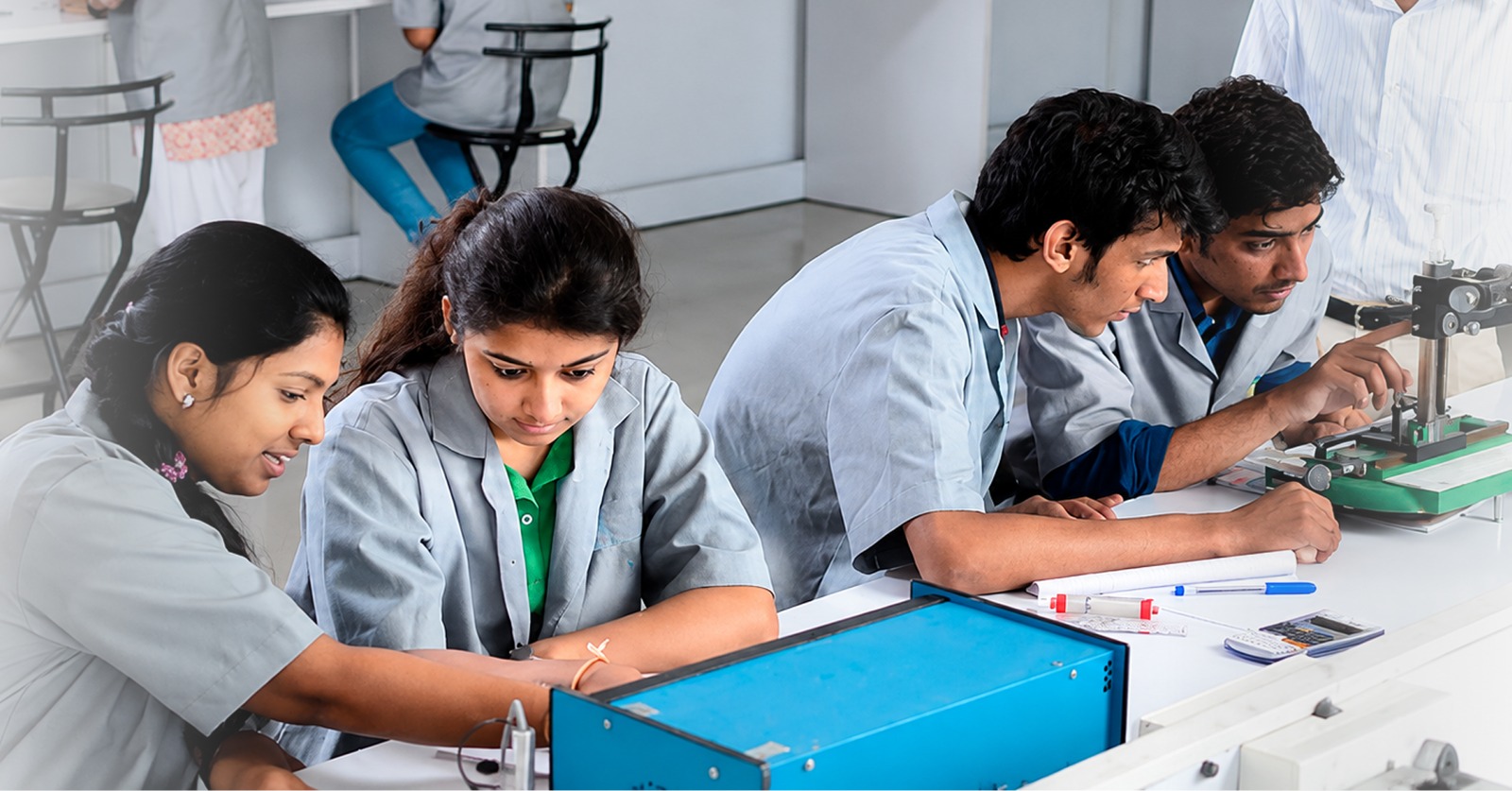
Similarly, science can move beyond memorising definitions and involve experiments, observation and investigation.
This shift from “What is the answer?” to “How can we find the answer?” can make learning more meaningful.
How Schools Can Develop Problem-Solving Skills
Problem-solving does not develop through a single subject or activity. It grows through the overall learning environment of a school.
1. Encouraging Students to Ask Questions
Curiosity is the starting point of problem-solving.
When students are encouraged to ask questions instead of simply accepting information, they begin to explore subjects more deeply.
Teachers can create classroom discussions where students are comfortable asking why something happens, whether there is another solution or how an idea could be applied differently.
Such questioning develops independent thinking.
2. Learning Through Real-Life Situations
Students understand concepts better when they can connect them with situations outside textbooks.
Schools can introduce activities involving planning, budgeting, environmental issues, teamwork, experiments and community-based challenges.
For example, students could be asked to design a simple plan for reducing waste at school. They would need to identify the problem, collect information, discuss possible solutions and evaluate which approach could work best.
The activity teaches much more than one academic concept.
It teaches students how to approach a problem.
3. Project-Based Learning
Projects give students an opportunity to take ownership of their learning.
Instead of completing a worksheet with one correct answer, students may have to research a topic, divide responsibilities, manage time and present their findings.
During this process, they encounter challenges.
Plans may not work. Information may be incomplete. Team members may disagree.
Learning how to handle these situations is an important part of developing problem-solving abilities.
This is one area where schools with a strong focus on practical and collaborative learning can give students valuable experiences.
The Role of Teachers in Developing Better Thinkers
Technology can provide information within seconds, but teachers continue to play an important role in helping students understand how to use that information.
A good teacher does not always provide the answer immediately.
Sometimes, the better approach is to ask another question.
“What do you think?”
“Why did you choose this method?”
“Is there another way to solve it?”
Questions like these encourage students to explain their thinking instead of simply producing an answer.
This approach can gradually build confidence and independent reasoning.
For a school aiming to provide a strong educational foundation, developing thoughtful learners should be as important as completing the syllabus.
Problem-Solving Through Sports and Activities
Problem-solving is not limited to academics.
Sports, competitions and extracurricular activities can also develop decision-making skills.
During a game, students constantly assess situations, make quick choices and adjust their strategy. Team activities require communication, cooperation and the ability to respond when something does not go according to plan.
Creative activities can provide similar experiences.
Whether students are participating in debates, quizzes, robotics, art, theatre or other activities, they are often required to think differently and respond to unexpected situations.
This is why the best school in Mahilpur should ideally offer students opportunities to learn both inside and outside the classroom.
Preparing Students for a Changing Career Landscape
The careers students will enter in the future may look very different from today's job market.
Artificial intelligence and automation are already changing how many tasks are performed. As technology takes over repetitive work, skills such as creativity, critical thinking, communication and problem-solving become increasingly important.
Students therefore need more than subject knowledge.
They need the ability to adapt.
A student who knows how to approach an unfamiliar problem is better prepared to learn new skills when circumstances change.
This is an important part of what it means to be future-ready.
Why Senior Secondary Education Is a Critical Stage
The senior secondary years are particularly important because students begin making decisions about higher education, careers and their areas of interest.
At this stage, learning should gradually become more application-oriented.
Students should have opportunities to analyse information, participate in discussions, complete projects and explore real-world applications of their subjects.
A best senior secondary school in Punjab should therefore focus not only on helping students achieve strong academic results but also on preparing them to make informed decisions about their future.
The ability to solve problems independently can be especially useful when students enter college or professional environments where they are expected to take greater responsibility for their learning.
Building Confidence Through Problem-Solving
Problem-solving also has an important connection with confidence.
When students solve a difficult problem independently, they experience something more valuable than simply getting the correct answer.
They learn that challenges can be approached step by step.
This mindset can help students become less afraid of making mistakes. Instead of seeing every mistake as failure, they can learn to treat it as information that helps them improve their approach.
Over time, this can develop resilience and a willingness to try again.
The Future Belongs to Students Who Can Think
Education cannot predict every challenge students will face in the future.
What it can do is prepare them with skills that remain useful even when circumstances change.
Problem-solving is one of those skills.
It teaches students to understand situations, evaluate possibilities, make decisions and learn from outcomes. Combined with strong subject knowledge, communication, creativity and collaboration, it can give students a stronger foundation for future academic and professional life.
For parents looking for the best school in Punjab, these qualities are worth considering alongside academic performance.
A school should not only prepare students to answer questions in an examination.
It should prepare them to face questions that do not yet have an answer.
And that is where problem-solving becomes more than just a classroom skill—it becomes a foundation for lifelong learning.
S.G.G.S.School
At S.G.G.S. Khalsa Collegiate Sen. Sec. School, Mahilpur, we nurture potential and inspire excellence, offering quality education for Senior Secondary (+1 & +2) students with strong values and holistic growth.
Get In Touch
Address
928Q+VXV, Hoshiarpur - Garhshankar Rd, Mahilpur, Punjab 146105
sggs@gmail.com
Phone
01884-245236